5–10% Retainage: Operator Rules for Holding Money Back on Subs

Yes, withhold when the subcontract allows it and the trigger is specific: incomplete scope, missing lien waivers, or defective work. Do not withhold without contract language backing it up. A common starting point is 5 to 10 percent retainage per draw, released at substantial completion and again at final waiver.
TL;DR:
- Hold retainage only if the subcontract explicitly authorizes it and tied to specific triggers like incomplete scope or missing waivers; informal or verbal agreements do not hold legally.
- The standard retainage amount is around five to ten percent per draw, with lower amounts for trusted subs and higher for new or stressed contractors.
- Use conditional lien waivers as a mandatory condition for release, ensuring no money is paid until the sub signs and conditions are met, to protect against disputes.
- Inspections, invoice verification, and waiver collection should occur before releasing funds, ideally on a set schedule, to prevent overpayment and legal risks.
- Wrongful withholding without contractual backing can result in breach claims, so alternatives like bonds, escrow, or letters of credit are advisable when trust is low.
Table of Contents
- When Is It Appropriate to Hold Funds From a Subcontractor?
- How Much Should You Retain? Sizing the Hold
- What Contract Language Protects You When You Withhold?
- Operator Playbook: Inspect, Verify, Collect Waivers, Release
- What Are the Legal Risks of Withholding, and What Are the Alternatives?
- Final Release Checklist Before You Let Go of Retainage
- FLIP: Draw Schedules, Photo Verification, and Waiver Tracking in One System
- FAQ
When Is It Appropriate to Hold Funds From a Subcontractor?
Withholding only works when the subcontract says you can do it. Retainage clauses, punch-list holdbacks, and conditions tied to lien waivers are standard tools, but they only protect you if they’re written into the agreement before the sub swings a hammer. A sample subcontract used across residential rehab work sets retention at a commonly used low single-digit percentage and ties withholding to a specific list: defective work, unresolved liens, missing invoices, and absent payroll records. That specificity matters. A vague “we’ll pay you when we’re satisfied” clause won’t hold up if a dispute lands in front of a judge or arbitrator.
Red flags that justify a hold on a flip:
- The sub refuses to sign a conditional lien waiver tied to payment.
- Invoices don’t match the schedule of values or shift after the fact.
- The sub asks for cash outside the draw schedule.
- There’s no documented scope of work to measure completion against.
Holding money back without a contractual trigger is a breach, not leverage. If the subcontract is silent on retainage or withholding conditions, you’re negotiating from a weaker position, and a sub’s attorney will notice.
Pro Tip: Write the retainage percentage and release conditions into the subcontract before the first draw goes out. Verbal agreements about holdbacks don’t survive a lien filing.
How Much Should You Retain? Sizing the Hold
Retainage on residential rehab work typically runs a moderate percentage per draw, commonly around five to ten percent. That range gives you enough leverage to force punch-list completion without starving a sub’s cash flow to the point where they walk off the job. Trusted repeat subs with a track record on your flips can often work at the lower end, or even no retainage, once you’ve built a payment history together. Retainage is negotiable, not fixed. Newer subs, specialty scopes (structural, electrical panel upgrades, anything with a permit inspection attached), or subs showing signs of cash-flow stress justify pushing toward the higher end.
A quick sizing method:
- Estimate the punch-list cost for remaining items.
- Multiply by 1.5 to 2x to account for markup and scheduling delay.
- If you can’t estimate punch-list cost, default to 5 to 10 percent of the draw.
- If the sub goes unresponsive on final items, holding back a sum approximately double the estimated remaining cost and using that reserve to fund a replacement tradesperson is a documented practice.
That last rule isn’t theoretical.
What Contract Language Protects You When You Withhold?
The single most useful clause: make a signed conditional lien waiver a condition precedent to payment. That means no waiver, no draw. You cannot force a sub to sign an unconditional waiver before money changes hands. Conditional waivers only take effect once payment clears, which is exactly why they’re the right tool. If a sub refuses to sign even the conditional version, that refusal is itself a signal. It usually means there’s a dispute they haven’t told you about, or a lower-tier sub they haven’t paid.
Beyond the waiver clause, your subcontract should specify:
- The retainage percentage and the milestones at which it steps down.
- A schedule of values that breaks the scope into line items you can inspect and pay against individually.
- Invoice timing (monthly, per-milestone) so payment requests arrive on a predictable cadence.
- Reserved rights for joint checks or direct payments to suppliers if a sub falls behind on its own payables.
- A requirement to document communications and track invoice and waiver status against each draw.
Pro Tip: Collect the SOV as part of the subcontract, not as an afterthought once work starts. A schedule of values written after the first draw request gets negotiated in the sub’s favor, not yours.
Operator Playbook: Inspect, Verify, Collect Waivers, Release
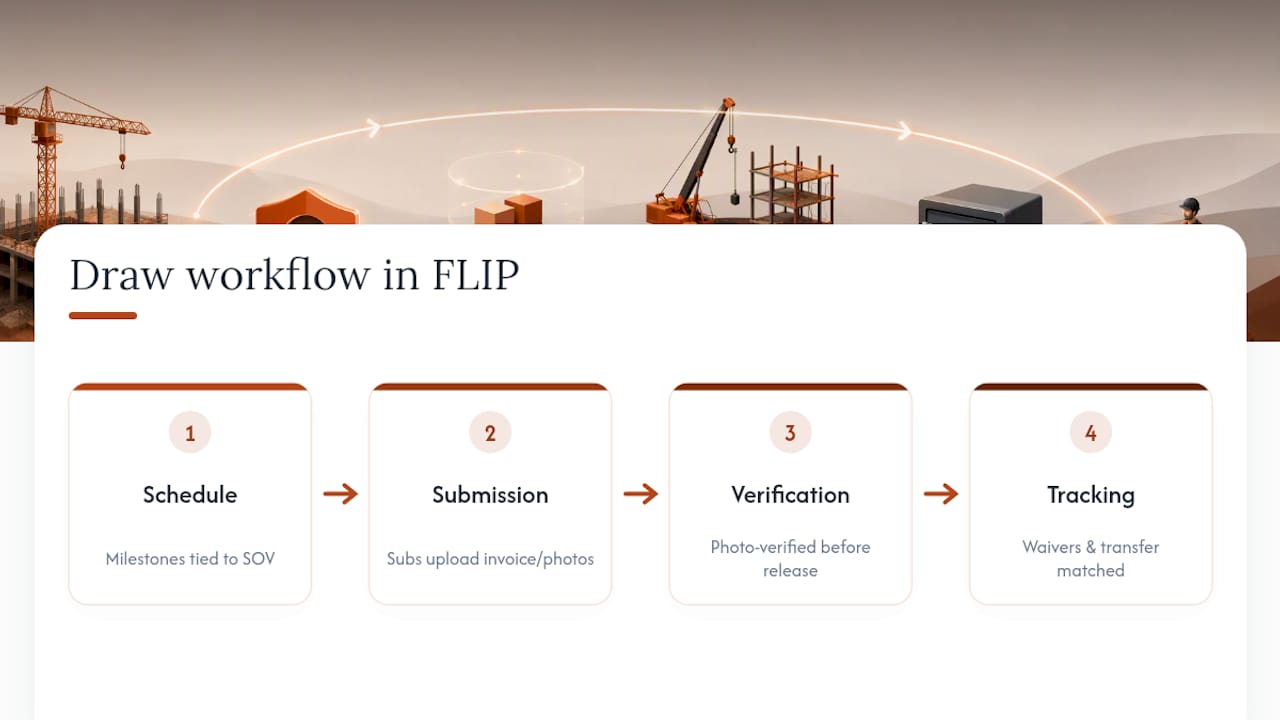
Run draws on a fixed rhythm. Tie every payment to a completed milestone in the schedule of values, and pay in arrears, never ahead of verified work. That single habit does more to prevent disputes than any clause in the contract.
- Inspect mid-week. Walk the scope, compare it against the SOV line items, and take photos of anything you’re paying for. Mid-week inspection gives you time to flag problems before the sub disappears for the weekend.
- Verify against the invoice. The invoice should match the SOV item, not a lump sum; following best practices for invoicing and payment tracking helps maintain clarity and control over payments. If a sub bills for drywall and electrical together, split it before you approve anything.
- Collect the conditional waiver. No waiver tied to the draw amount, no release. This is where the condition-precedent clause from your subcontract does its job.
- Release on a set day, typically Friday, after everything above is confirmed. A predictable release day keeps subs showing up consistently instead of front-loading effort and disappearing.
- Record the transfer confirmation alongside the invoice, the photos, and the signed waiver, all in one place tied to that draw.
For scopes where trust hasn’t been established yet, specialty trades, new subs, unusually large draws, escrow or joint checks add a layer of protection. Escrow holds the money with a neutral party and releases it only when both sides confirm the condition is met. It adds administrative steps, but for a $40,000 mechanical scope with a sub you’ve never worked with, that friction is cheap insurance.
Pro Tip: Never approve a draw on verbal confirmation that “it’s done.” Photos and a matched invoice are the minimum bar before money moves.
What Are the Legal Risks of Withholding, and What Are the Alternatives?
Wrongful withholding, holding money with no contract basis or beyond what the contract authorizes, exposes you to a breach claim. The subcontract language and your documentation are the entire defense. If you can’t point to the clause and the evidence (photos, SOV mismatch, missing waiver), a hold looks like nonpayment, not retainage.
Alternatives to cash retainage exist for a reason:
- Performance or retention bonds shift the completion risk to a surety, useful on larger scopes where you want security without tying up cash on your side.
- Letters of credit work similarly for subs with strong banking relationships.
- Escrow accounts hold funds with a neutral third party, better than a unilateral hold when trust is genuinely low.
Unpaid subs can file a mechanic’s lien against the property, and lien deadlines vary sharply by state. If a sub refuses a conditional waiver outright, document the refusal in writing, present the conditional waiver again in the next payment request, and get counsel involved before you release anything further.
Final Release Checklist Before You Let Go of Retainage
Retainage exists to force punch-list completion. Release it in two steps, not one.
- Confirm the punch list is fully closed and signed off.
- Collect final conditional or unconditional lien waivers for the full contract amount.
- Reconcile the final invoice against the schedule of values, line by line.
- Confirm proof of payment to any lower-tier subs or suppliers, if your subcontract requires it.
- Attach final inspection photos to the record.
- Note substantial completion date if the project required a certificate.
Release a partial share of retainage at substantial completion, and hold the rest for final waivers. Common administrative errors, applying the wrong retainage percentage, forgetting to step it down at a milestone, or misapplying it against a change order, trap cash that should have gone out weeks earlier. Keep every signed waiver and transfer confirmation on file. If a lien surfaces six months after closeout, that record is your defense.
FLIP: Draw Schedules, Photo Verification, and Waiver Tracking in One System
Running this workflow on spreadsheets and text threads works until it doesn’t, usually right when a sub disputes a hold and you need the paper trail fast. FLIP is built to run the draw schedule end to end: milestones tied to the schedule of values, photo-verified approval before a payment releases, and lien-waiver status tracked against every draw instead of buried in email.
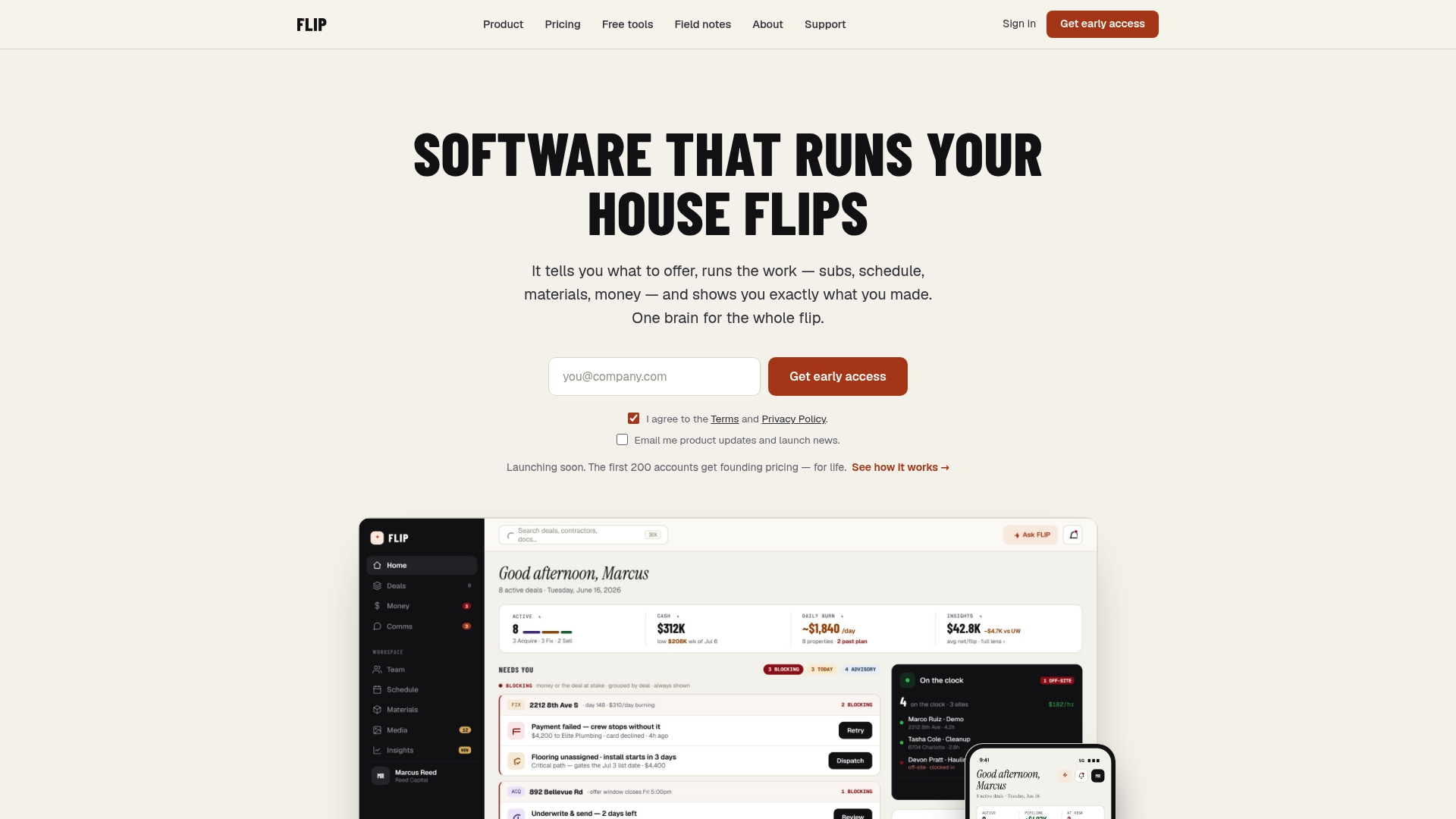
Subs log in to the Use the same app through a phone-number login, free. and are expected to Submit invoices and photos through it rather than a side channel. That keeps the record in one place: invoice, photo, waiver, and transfer confirmation, matched to the same draw. Flip, the assistant inside the product, would flag a mismatch between an invoice and the SOV before you approve it, once that capability ships. Run the numbers on a hold decision with the holding cost calculator before deciding whether a 5 percent or 10 percent retainage makes sense against your carrying costs on that deal.
FLIP is in early access. Check the product page for what’s live now and what’s coming next.
FAQ
Should You Always Hold Retainage on a Sub?
No. Hold retainage only when the subcontract authorizes it and tie the amount to a specific trigger, like an open punch list or unsigned waiver, rather than holding by default on every draw.
How Much Retainage Is Standard on a Flip?
Residential retainage typically runs 5 to 10 percent per draw, released partially at substantial completion and fully after final lien waivers are collected.
Can a Sub Refuse to Sign a Lien Waiver?
A sub can refuse an unconditional waiver before payment, but a conditional waiver tied to that specific payment is standard and can be made a condition of the draw in the subcontract.
What Happens if You Withhold Payment Without a Contract Basis?
Withholding without contract language, or beyond what the contract authorizes, can be treated as a breach and expose you to a claim, since your documentation and the clause itself are the only defense.
What Should You Do if a Sub Goes Unresponsive on Punch-List Items?
Hold back double the estimated cost of the remaining items, document the situation in writing, and use that reserve to fund a replacement tradesperson to finish the scope.
Recommended
FLIP runs the whole job — scope, subs, schedule and money on one record.