Lock Scope to ARV: 5 Controls for House Flipping Project Management

Run every flip like an operations business, not a renovation. The system that works enforces scope tied to ARV, a line-item budget checked weekly, a schedule with visible dependencies, and draw packets built for lender approval before you swing a hammer. FLIP is built to run that system end to end. Get scope, budget, and MAO locked before demo, and holding costs stop being a mystery.
TL;DR:
- Flippers must lock scope, budget, and schedule before demo to prevent cost overruns and schedule delays, using a line-item budget and contingency plan.
- Long-lead materials should be ordered during demo, and critical inspections scheduled upfront to avoid permit delays that can halt progress.
- Weekly reviews of budget, schedule, and contractor invoices, along with strict documentation of change orders, are essential to keep costs within the original underwriting.
- Managing contractors requires verifying licenses, signing scope and payment terms, and collecting daily photos and reports to prevent disputes and lien issues.
- Using purpose-built operations software integrates all control points, from scope to payments, reducing reliance on spreadsheets and text threads for a more reliable rehab process.
Table of Contents
- What Does House Flipping Project Management Actually Cover?
- How Do You Build a Rehab Schedule That Doesn’t Fall Apart?
- How Do You Keep the Budget From Blowing Past Underwriting?
- How Do You Manage Contractors Without Getting Burned on Payment Disputes?
- When Do You Hire a Project Manager Instead of Running It Yourself?
- Field Notes: Templates Operators Actually Use
- How Do You Manage Permits Without Stalling the Schedule?
- How Do You Keep Everyone on the Same Page During a Rehab?
- How Do You Manage Materials Without Overbuying or Running Short?
- What Does Sale Prep Look Like After the Rehab Is Done?
- FLIP: The Operations System Built for This Checklist
- FAQ
What Does House Flipping Project Management Actually Cover?
House flipping project management is the discipline of controlling scope, schedule, budget, and crew output against a fixed target: your after-repair value (ARV) and your maximum allowable offer (MAO). It is not a to-do app. It is the system that keeps a rehab from drifting past the numbers you underwrote at contract.
Five components carry the weight. Build them before demo starts, not after.
Scope of work. Every line item traces back to the ARV. If a $30,000 kitchen doesn’t move resale value in that comp range, it typically shouldn’t go in the scope. Vague scopes tend to produce vague contractor bids and increase change-order risk later.
Line-item budget with contingency. Break the rehab into trades and materials, not a lump sum. Set contingency as a reasonable percentage of hard costs depending on the property’s age and potential unknown conditions.
Weekly budget vs. actual. Compare committed cost against actual spend every week, not at the end. Drift shows up early if you’re looking.
Draw-request packaging. Lenders want photos of completed work, matched line items, and lien waivers before releasing funds. Draw packets built to that standard move faster than ones assembled after the fact.
Quality control and punch list. Walk the property against the scope document at each milestone, not just at the end. The final punch list should have zero open items before you list.
The order matters:
- Lock scope to ARV.
- Build the line-item budget and contingency.
- Sequence the schedule with dependencies.
- Set draw milestones against the schedule.
- Run weekly QC checks through completion.
How Do You Build a Rehab Schedule That Doesn’t Fall Apart?
Most rehabs follow a canonical sequence: demo, structural and framing repairs, rough mechanicals (plumbing, electrical, HVAC), insulation and drywall, flooring, cabinets and countertops, paint, fixtures and trim, final cleaning. Long-lead items like custom cabinets, specialty windows, or backordered appliances need to be ordered during the demo phase, not when you reach that line item on the schedule.
- Order long-lead materials at demo start.
- Sequence rough mechanicals before drywall closes the walls.
- Schedule flooring after paint to avoid material damage, unless the flooring trade requests otherwise.
- Push fixtures and trim to the final third of the schedule.
- Reserve the last week for punch-list closure only. No new work orders.
When a delay hits, shift every downstream dependency, not just the delayed task. A framing delay of five days pushes mechanicals, drywall, and paint by five days each unless you have float built in. Float on non-critical-path tasks (landscaping, exterior paint) absorbs delay without touching your close date.
One person owns the schedule. Split ownership between a flipper and a general contractor and you get two versions of “on track.”
Pro Tip: Update the schedule every Friday, even on weeks with no visible progress. A schedule that only gets touched when something breaks is not a schedule, it’s a record of what already went wrong.
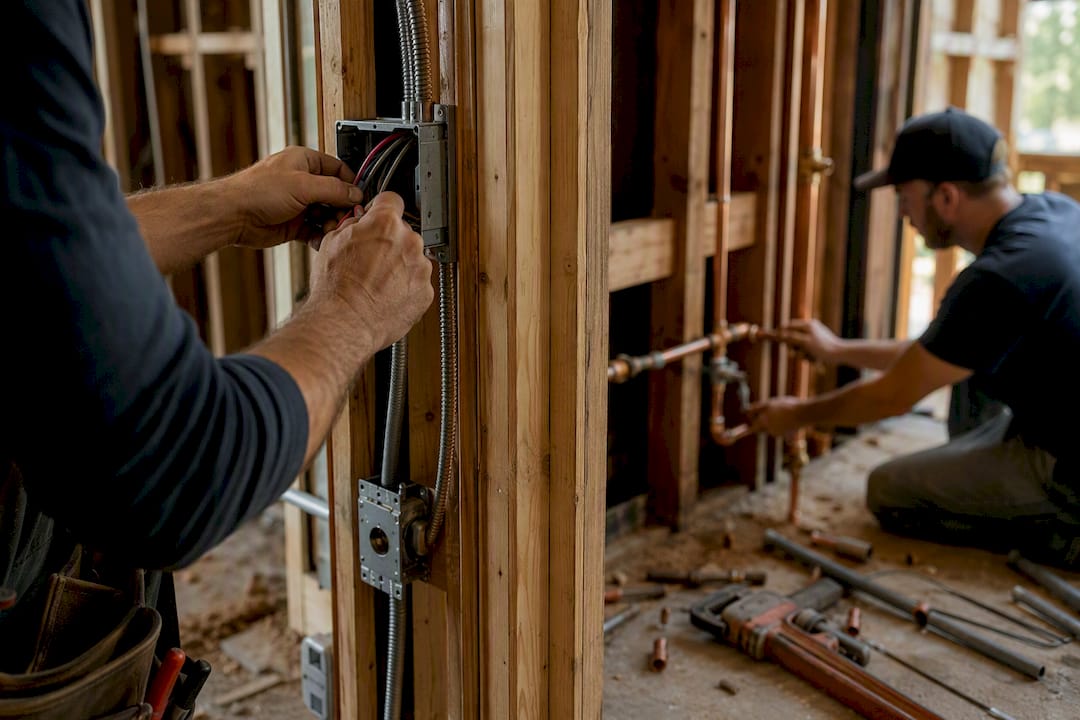
Safe overlaps: electrical rough-in and plumbing rough-in can run concurrently in different rooms. Exterior work (roofing, siding, landscaping) runs parallel to interior work almost always.
How Do You Keep the Budget From Blowing Past Underwriting?
Set a baseline budget at contract, before any work order goes out. Every subsequent cost gets measured against that baseline, not against last week’s actual spend. That distinction separates operators who catch overruns early from operators who find out at the draw.
Change orders commonly occur in many rehabs. The rule: no verbal change orders. Every change gets documented with the added cost, the schedule impact in days, and a signature before the work starts. A $2,000 change order that also adds four days to the schedule is really a $2,000-plus-holding-cost change order. Track both numbers.
Weekly budget vs. actual reviews catch drift before it compounds. A rehab that is noticeably over budget at the halfway mark rarely self-corrects, often ending significantly over budget by completion unless timely intervention occurs.
Standard draw-request packet:
- Line items completed since the last draw, matched to the original budget.
- Date-stamped photos of each completed item.
- Signed lien waivers from every contractor paid in that draw.
- Updated schedule showing percent complete against the draw schedule.
Photo-verified approval gates the payment. A contractor doesn’t get paid until the work is photographed and matched against the scope line. This single control does more to prevent lien exposure than any contract clause, because it stops payment from ever running ahead of completed, verifiable work.
How Do You Manage Contractors Without Getting Burned on Payment Disputes?
Onboard every contractor before they touch the property. Skip a step here and it costs you at closing, not during the rehab.
- Verify license and insurance coverage before the first work order.
- Collect a signed W-9 for every 1099 contractor.
- Get the scope of work signed, with a per-line-item price, not a lump-sum estimate.
- Confirm payment terms in writing: draw schedule, percentage per milestone, and lien waiver requirements at each payment.
Field reporting keeps you honest about what’s actually happening on site. Require daily site photos and a short daily note from whoever is running point (you, a PM, or the lead contractor). Weekly summaries roll those up against the schedule.
Payment approval needs one signer, not a committee. That person reviews the evidence: photos, completed line items, and a signed lien waiver, before releasing funds. No evidence, no payment, no exceptions, no matter how long you’ve worked with the trade.
Rate every contractor after closing: on-time performance, quality on punch-list items, and responsiveness. That record becomes your bidding shortlist on the next deal, and it separates trades worth rebidding from trades you replace.
When Do You Hire a Project Manager Instead of Running It Yourself?
Self-managing works for one or two flips a year, especially your first ones, when you need the scar tissue of doing it yourself. Past two to three simultaneous or sequential projects annually, the math on your time usually favors a PM.
A PM’s deliverables should be explicit, not implied:
- Schedule ownership and weekly updates.
- Draw-request management, packaged and submitted on time.
- Punch-list closure before final walk-through.
- Weekly written reporting against budget and schedule.
Compensation typically runs a flat fee per project plus a performance bonus tied to hitting the schedule and staying under budget. That structure keeps the PM’s incentives pointed at your numbers, not just at billable hours.
Delegating the work doesn’t mean losing visibility. Require photo evidence at every milestone, a weekly dashboard update, and a sign-off gate before any draw goes out. You’re not managing the rehab anymore. You’re managing the person managing the rehab, which is a different job with different controls.
Field Notes: Templates Operators Actually Use
A short SOW template beats a long one nobody reads on site. Structure it by room, then by trade, then by material spec and cost. Re-run comps and re-check the SOW against ARV at three points: after inspection, mid-rehab, and before you finalize the listing price. Initial ARV estimates drift, and a scope built on a stale number puts margin at risk.
Weekly budget vs. Each checkpoint compares committed cost, actual spend, and remaining budget against remaining scope.
Standard draw packet checklist:
- Line-item completion report matched to the original budget.
- Dated photos: wide shot of the room, close-up of the completed work, and one photo showing the trade’s tools or materials on site as proof of active work.
- Signed lien waivers from every paid contractor.
- Updated schedule with percent complete.
| Checkpoint | What to verify | Action if off-target |
|---|---|---|
| Pre-demo | Scope matches ARV comps | Revise scope before ordering materials |
| Mid-rehab | Budget vs. actual weekly review | Cut discretionary line items or add contingency |
| Pre-completion | Punch list at zero | Delay listing until closed |
Scope to the ARV, not to your taste is the rule that governs every decision above it. A rehab scope built around what you’d want in your own house, instead of what the comps support, is the fastest way to erase margin.
How Do You Manage Permits Without Stalling the Schedule?
Permit delays are one of the most predictable schedule killers in a rehab, and one of the most avoidable. Pull permits for the scope items that require them (electrical, plumbing, structural, additions) before you sequence the rest of the schedule around them, not after.
Local permitting timelines vary by jurisdiction, sometimes by weeks. Call the permitting office or check the online portal before you finalize your schedule, not after your contractor shows up ready to start rough-in with no inspection scheduled.
Match your scope document to your permit application. If the inspector shows up and finds work that doesn’t match what was permitted, that’s a stop-work order, and stop-work orders cost more in holding costs than the permit fee ever would have.
Schedule inspections as milestones on the schedule itself, not as an afterthought. Rough-in inspection, insulation inspection, and final inspection each gate the next phase of work. A contractor who closes drywall before the rough-in inspection is signed off creates a rework problem, not a shortcut.
Keep copies of every permit, every inspection sign-off, and every code-compliance document in one place tied to the property file. Buyers’ agents and appraisers ask for this at closing more often than flippers expect, and a missing permit record can stall a sale even after the work is done and done well.
How Do You Keep Everyone on the Same Page During a Rehab?
A rehab with multiple trades and no shared communication channel often suffers from delayed change awareness, especially by those most affected.
Text-based communication with contractors works better than phone calls for anything that needs a record. A phone call has no paper trail. A text confirming a change order, a delay, or a payment does.
Set a communication cadence and hold it. Daily site photos and a short note from whoever is on site. Weekly written summaries that roll up progress against the schedule and budget, sent to every stakeholder, including your lender if the deal requires it.
Centralize the record. Scattered texts, emails, and phone notes across five different threads make it impossible to reconstruct what happened when a dispute comes up later, and disputes come up on almost every rehab eventually. One property, one communication thread, one place to look.
Define who needs to know what, and when. A contractor doesn’t need your lender’s contact information. Your lender doesn’t need daily photos of grout work. Match the information to the person who acts on it.
How Do You Manage Materials Without Overbuying or Running Short?
Order long-lead materials the day demo starts, not when the schedule reaches that line item. Cabinets, specialty windows, certain appliances, and custom fixtures routinely run four to eight weeks out, and a schedule built without that lead time baked in will stall waiting on a delivery truck.
Match every material order to the signed scope of work, line by line. Overbuying ties up cash in materials sitting in a garage or storage unit; underbuying stalls a trade mid-installation waiting on a second delivery.
Track what’s been ordered, what’s been delivered, and what’s been installed as three separate states, not one. A pallet of flooring sitting in the driveway isn’t the same as flooring installed and inspected, and treating them the same in your budget tracking hides real schedule risk.
Store materials on site securely once delivered. Theft of copper wiring, appliances, and fixtures from active rehab sites is common enough that most experienced flippers lock up high-value materials or stage deliveries closer to install date rather than storing them for weeks.
Reconcile material invoices against the line-item budget weekly, in the same review where you check labor costs. Materials that quietly run over budget on a per-item basis compound across a full rehab faster than labor overruns do, because nobody’s watching invoice totals as closely as they watch the crew.

What Does Sale Prep Look Like After the Rehab Is Done?
Re-run comps before you set the listing price, not at the start of the rehab. Comps shift over a three-to-six-month rehab window, and the ARV you underwrote at contract may not match the market you’re selling into.
Close the punch list to zero before you schedule photos or showings. A buyer’s agent who walks a property with an open punch-list item, however minor, uses it as a negotiating point on price.
Stage the property to match the comp set you’re competing against, not to your personal taste. A staged home in the right price bracket sells faster and often closer to list price than an empty or over-decorated one.
Professional photos and coordinated timing with your listing agent matter more than most flippers budget for. A rehab that took four months and $60,000 deserves photos that don’t undersell it in the first ten seconds of an online listing.
Line up your final walk-through checklist against the original scope of work one more time before closing. Anything left incomplete at this stage becomes a buyer’s inspection finding, and buyer’s inspection findings become price negotiations you didn’t plan for.
FLIP: The Operations System Built for This Checklist
Every control described above, scope tied to ARV, weekly budget vs. actual, draw packets built for lender approval, contractor payment gates, is a manual process most flippers currently run across spreadsheets, text threads, and separate apps. FLIP is built to run all of it in one system, purpose-built for fix-and-flip operations instead of adapted from generic project management software.
The rehab scope checklist maps directly to the scope-to-ARV rule: build the SOW by room and trade, tied to comps, before a work order goes out. Budget vs. actual tracking would follow the same weekly checkpoint structure covered above, pre-demo, mid-rehab, pre-completion, with photo-verified approval gating every contractor payment before funds move. That single control is the mechanism that keeps lien exposure and draw delays down, because payment never runs ahead of documented, photographed work.
Contractors and subcontractors log into the same system through a phone-number login, at no cost to them. The flipper pays for the software; the crew doesn’t. Run your numbers first with the flip profit calculator to check MAO against your target margin, then get in line for early access at Flip to see how the full operations system maps to your next deal.
FAQ
What Is the 70% Rule for Flipping Houses?
The 70% rule says your MAO should not exceed 70% of the ARV minus repair costs. Treat it as a fast screening filter for deal viability, not a substitute for a detailed underwriting check at contract, inspection, and pre-listing.
Is House Flipping Still Profitable in 2026?
Flipping remains profitable for operators who underwrite conservatively, control rehab costs against a fixed budget, and re-check ARV at multiple milestones rather than relying on a single estimate from months earlier. Margin compresses fastest for flippers who skip the weekly budget vs. actual check and discover overruns only at the draw.
How Much Does It Cost to Flip a 1,500 Square Foot House?
Rehab costs vary widely by scope, region, and the property’s starting condition, ranging from a light cosmetic refresh to a full gut renovation. Build your line-item budget from an actual scope of work and current contractor bids rather than a per-square-foot rule of thumb, since finishes and structural condition swing the number more than square footage alone.
What Is the 3-3-3 Rule in Real Estate?
Definitions of the 3-3-3 rule vary by source and context, and no single canonical version applies universally to house flipping. Rely on your own underwriting milestones, scope, budget, and schedule checkpoints, rather than a generalized rule that may not fit your specific market or deal.
Recommended
FLIP runs the whole job — scope, subs, schedule and money on one record.