Protect Margin Fast: Five Phase House Flipping Checklist for Operators

A house flipping checklist is a five-phase control system: screen the deal, verify it under contract, start the job clean, run rehab on budget, then sell and reconcile profit. The highest-leverage actions sit at the front: pull comps, set your MAO, lock permits and lender draws before demo, then finish with a verified punch list. Every phase exists to protect margin, not to fill a to-do list.
TL;DR:
- The 70% rule provides a quick screening method, estimating MAO at 70% of ARV minus rehab costs, but does not replace detailed budgeting.
- Proper due diligence includes full inspections, title checks, permit verification, and re-running the underwriting with actual findings before finalizing bids.
- Starting logistics such as permits, utilities, and baseline photos should be completed before demo to prevent costly delays during rehab.
- Keeping rehab on budget requires detailed quotes, change-order policies, photo proof for draws, and contingency funds to absorb unexpected costs.
- A comprehensive post-mortem helps refine your underwriting process and avoid recurring mistakes on future flips.
Table of Contents
- What Goes Into a House Flipping Checklist for Screening Deals?
- What Should You Verify During the Due Diligence Period?
- How Do You Set Up a Flip Project Before Demo Starts?
- How Do You Keep a Rehab on Budget and on Schedule?
- What Belongs on a Pre-Listing Checklist Before You Sell?
- How Do You Close Out a Flip and Reconcile Profit?
- How FLIP Maps to Each Phase of the Checklist
- FLIP Runs the Operations Side of Every Phase on This Checklist
- FAQ
What Goes Into a House Flipping Checklist for Screening Deals?
Screening happens before you write an offer, and it lives or dies on comps. Pull sales from the last three to six months, within about a half mile, matching square footage, bed and bath count, and condition. Loose comps produce a loose ARV, and a loose ARV wrecks every number downstream.
The 70% rule is a screening shortcut, not underwriting. MAO equals 70% of ARV minus your rehab estimate. A house with a given after-repair value (ARV) and rehab estimate lets you calculate a maximum allowable offer (MAO) using the 70% rule as a rough screening shortcut. That number tells you whether to keep looking at the deal. It does not replace a full line-item budget.
Before you offer, build the underwriting stack:
- Purchase price and closing costs on acquisition
- Rehab, broken out room by room, not as a lump sum
- Permit fees by trade
- Holding costs: interest, taxes, insurance, utilities
- Financing fees, points, and origination
- Selling costs: agent commissions, closing costs, staging
A room-by-room rehab scope beats a single number every time. Line-item bids make change orders visible and variance easy to track instead of guessed at. Run quick pre-visit checks too: listing history, zoning restrictions, HOA rules, and anything in the title that looks like a red flag. Screen those before the property visit, not after.
What Should You Verify During the Due Diligence Period?
Under contract, your job shifts from screening to verification. The inspection period is when you either confirm the deal or walk.
- Order a full inspection, and call in trade specialists for anything structural, electrical, or related to the roof or HVAC.
- Check for lead hazards if the property was built before 1978. EPA guidance on lead-safe practices applies to both testing and rehab planning, and skipping it creates liability that shows up later, not now.
- Pull title work: confirm liens, unpaid taxes, easements, and current occupancy status.
- Verify permit history on the property. Unpermitted additions or finished basements are common, and they turn into change orders once your inspector flags them.
- Walk the property again with your general contractor or subs before you finalize bids. Numbers change once trades see the actual conditions.
- Re-run your underwriting model with inspection findings and actual lender terms. If MAO no longer holds, that is your answer.
Due diligence is where paper numbers meet the real house. Treat every step as a chance to update the model, not confirm what you already believed.
How Do You Set Up a Flip Project Before Demo Starts?
Startup logistics decide whether week one is productive or wasted on stoppages. Handle these before a hammer swings:
- Order dumpsters, portable toilets, and any long-lead materials (cabinets, windows, custom trim) that take weeks to arrive.
- Apply for permits and schedule inspections early. Confirm in writing who pulls each permit, you or the GC, since inspectors will only talk to the permit holder.
- Turn on utilities and set them to autopay. A shut-off mid-rehab stalls trades and adds a reconnection fee on top of lost days.
- Take dated before photos of every room, the exterior, and the mechanicals. These photos back your scope, protect you in disputes, and document baseline condition.
- Change the locks and set access rules for every sub who needs a key or code.
- Build one master folder: purchase contract, permits, scope of work, draw schedule, and a place to store lien waivers as they come in.
Skipping any of these does not save time. It just moves the delay to week two, when it costs more.
How Do You Keep a Rehab on Budget and on Schedule?
Sequence matters more than speed. Structural repairs, mechanical systems, and moisture issues go first. Rough trades (framing, electrical, plumbing, HVAC) follow, then inspections, then finishes, then the punch list. Flip that order, and you tear out finished work to fix something behind a wall.
Budget control during rehab comes down to four habits:
- Require line-item invoices from every sub, tied back to the original scope, not a lump-sum bill.
- Set a change-order policy in writing before work starts: who approves it, what triggers it, how it affects the draw.
- Verify completed work with photos before releasing payment on any draw.
- Carry a contingency on the total rehab budget to absorb underestimated repairs and prevent margin erosion. Underestimated repairs are one of the most common reasons flips lose money, and the contingency is what absorbs that miss without eating your profit.
Prepare draw documentation and schedule lender inspections in advance, not the week you need the money. A draw request sitting in a queue because the inspection wasn’t booked adds holding days you’re paying interest on.
Contractor management runs on the same discipline: written scopes per trade, a payment schedule tied to milestones, lien waivers collected at each payment, and clear acceptance criteria for what “done” means on each line item.
Pro Tip: Never release a draw payment until you have photo proof the specific line item is complete. A verbal confirmation from a sub is not documentation, and it will not hold up if a dispute over payment comes later.
What Belongs on a Pre-Listing Checklist Before You Sell?
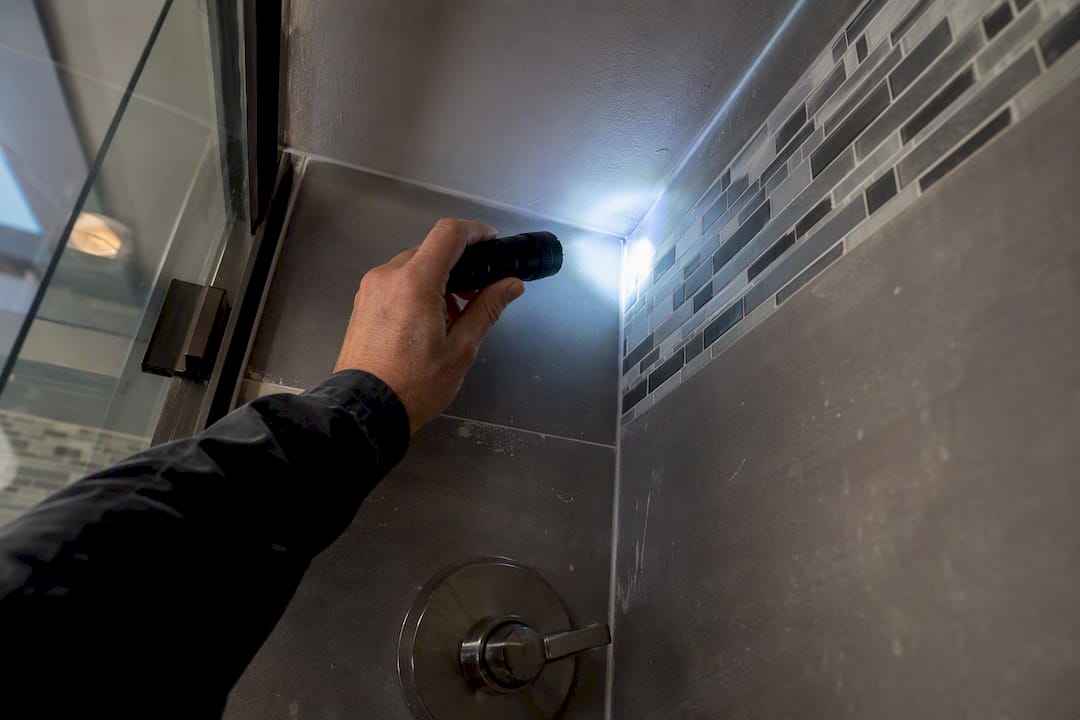
The finish phase is where ARV gets protected or lost. Run a detailed punch list across every system: HVAC, plumbing, electrical, appliances, doors, windows, and every finish surface. A buyer’s inspector will find what your punch list missed, and it becomes a repair credit at the negotiating table.
Bring your listing agent in before you finalize selections, not after. Agents see buyer demand in the neighborhood in real time, and matching your finish level to what buyers there actually want avoids over-scoping into features nobody’s paying extra for.
Before you list:
- Order professional photography and time staging to your local market’s demand window.
- Re-check comps and confirm your pricing reflects current, not stale, market data.
- Keep utilities on, the lawn cut, and the house clean through the appraisal and final walk-through.
- Prepare transfer documents, appliance warranties, and a complete set of keys for closing.
A house that shows finished but isn’t move-in ready loses buyers at the walk-through, not the listing.
How Do You Close Out a Flip and Reconcile Profit?
Closing is not the end of the checklist. It’s the phase where you confirm what actually happened versus what you underwrote.
- Review the settlement statement line by line and compare net proceeds against your original underwriting numbers.
- Collect final lien waivers from every sub and organize final invoices and permit records for your files.
- Run a post-mortem: how accurate was your ARV, where did rehab costs vary from the scope, what did holding costs actually run, and did the timeline slip.
- Update your templates and checklist based on what the post-mortem shows before you screen the next deal.
Every flip either sharpens your underwriting or it doesn’t. The post-mortem is where that sharpening happens, or where it gets skipped and the same mistake repeats on the next property.
How FLIP Maps to Each Phase of the Checklist
Each phase above maps to a specific tool, not a general workflow. A rehab scope checklist organized by house age and condition turns Phase 1’s room-by-room estimate into a line-item budget instead of a guess. The hard money loan calculator and holding cost calculator handle the financing and carry-cost lines that MAO depends on.
Draw scheduling with photo-verified payment approval, described conditionally since FLIP is in early access, would give lenders the documentation Phase 4 requires without a manual paper trail. The flip profit calculator supports the Phase 6 post-mortem by comparing actual proceeds to original underwriting in one place instead of across three spreadsheets.
FLIP Runs the Operations Side of Every Phase on This Checklist
Contractors miss deadlines. Draws stall waiting on paperwork. Rehab scopes get written vague and turn into change-order disputes three weeks in. That’s the operational side of flipping, and it’s the side that erodes margin fastest, not the deal itself.
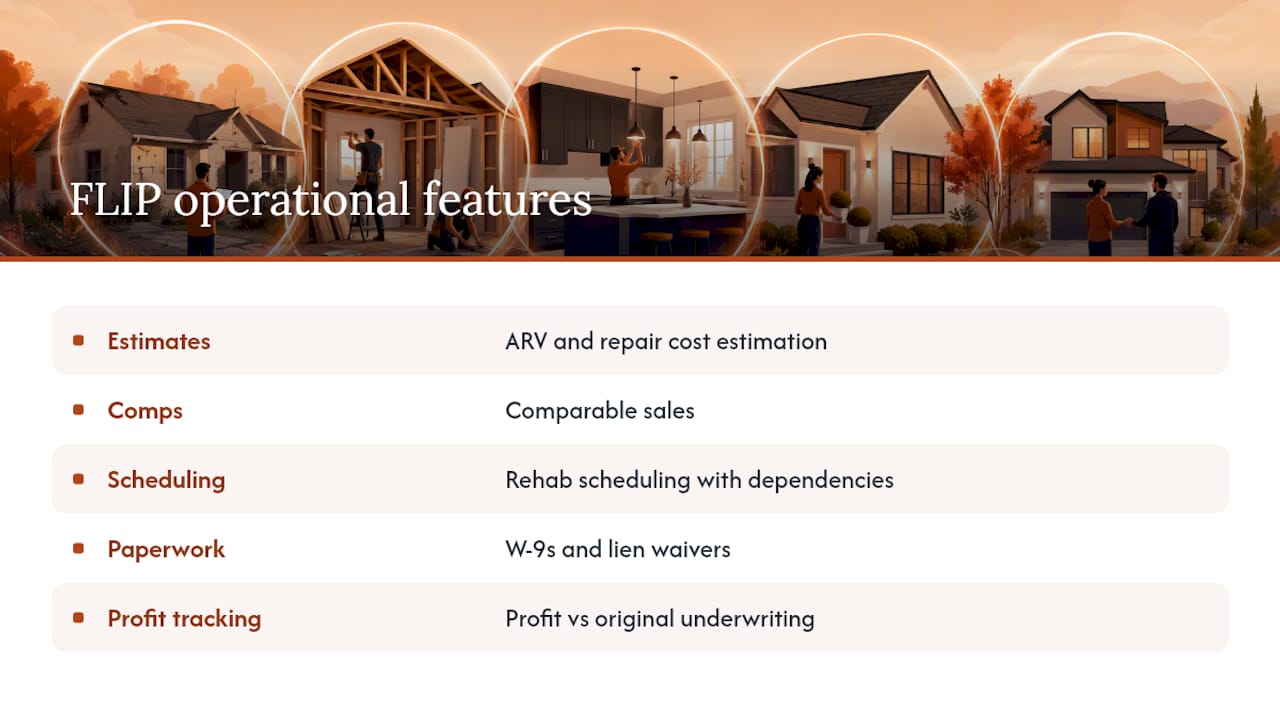
FLIP is software built to run a flip end to end, starting where the seller conversation ends and comping begins. It handles ARV and repair cost estimation, comparable sales, rehab scheduling with real task dependencies, sub bidding, contractor paperwork including W-9s and lien waivers, and profit tracked against your original underwriting. Contractors and subs log in through the same app with a phone-number login, free forever, since the flipper pays for the software and the crew doesn’t.
FLIP is pre-launch. There’s no live product to log into yet, and no public trial, only early access. If the checklist above is how you already run deals on a spreadsheet, FLIP is built to be the version that tracks it automatically, phase by phase, from screen to close. Get on the early access list at Flip and see what it looks like when it ships.
FAQ
What Is the 70% Rule for Flipping Houses?
The 70% rule says your maximum offer should be no more than 70% of ARV minus rehab costs. It’s a fast screening shortcut to filter deals before you build a full underwriting model, not a substitute for one.
What Are the Most Common Mistakes in House Flipping?
Underestimating rehab costs is the most frequent one, usually from skipping a room-by-room scope in favor of a lump-sum guess. Skipping a contingency, missing permit requirements, and finalizing finishes without input from a listing agent round out the list.
How Much Does It Cost to Flip a 1,500-Square-Foot House?
Total cost depends entirely on purchase price, rehab scope, and local market, and there’s no single figure that applies across markets. Building an itemized budget covering purchase, room-by-room rehab, permits, holding costs, financing fees, and selling costs for your specific property is the only reliable way to get that number.
Is House Flipping Still Profitable in 2026?
Flipping stays profitable for investors who underwrite conservatively, carry a 10 to 15% contingency, and control holding costs through tight scheduling. Margins get thinner when comps are stale, rehab scopes are vague, or draw delays extend the timeline, so the discipline behind the checklist matters more than the market cycle itself.
Do I Need Permits Before Starting Rehab?
Yes, for most structural, electrical, plumbing, and mechanical work, and pulling them after the fact risks stop-work orders and fines. Confirm who holds the permit, you or your GC, before applying, since inspectors only communicate with the permit holder of record.
Recommended
FLIP runs the whole job — scope, subs, schedule and money on one record.